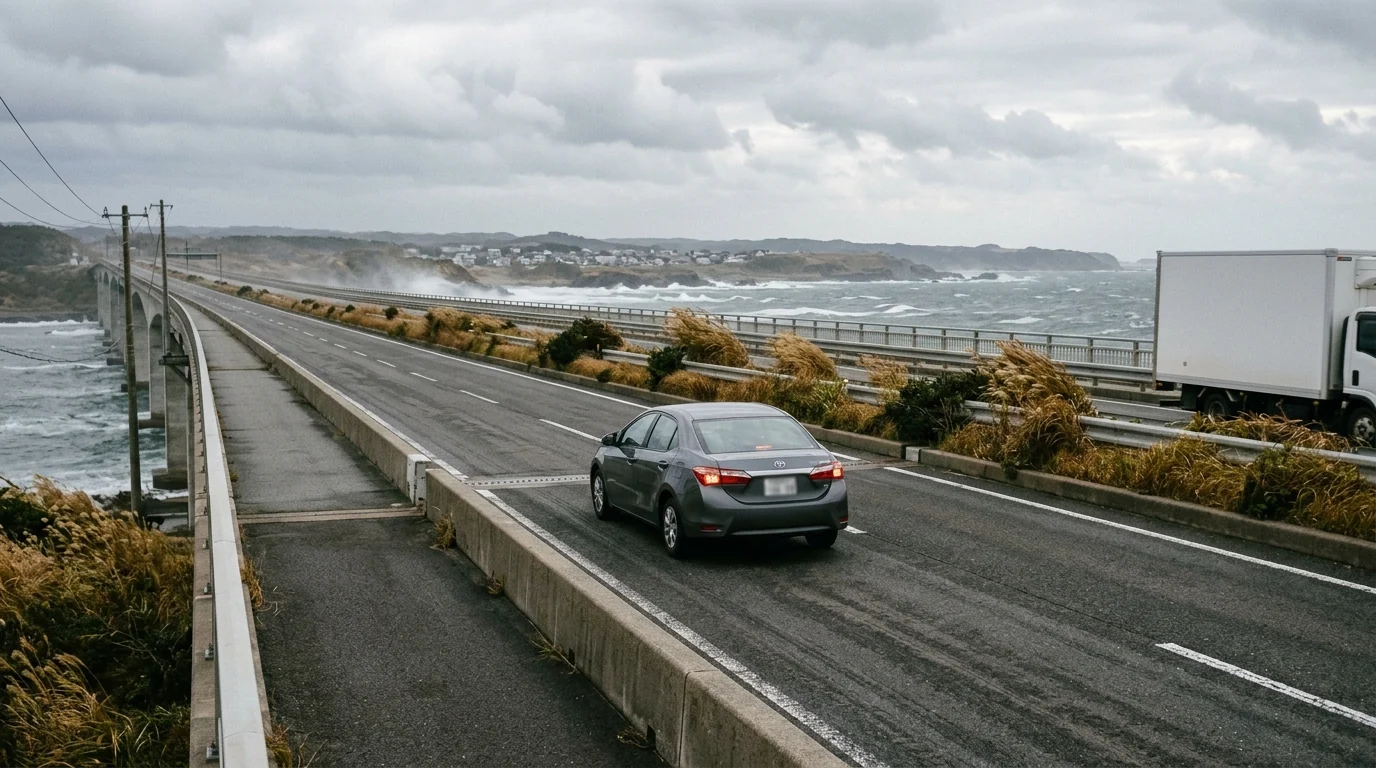
Strong wind can turn routine driving into a constant series of small corrections: a push out of lane position, a sudden tug near trucks, or a quick wobble when leaving the shelter of trees and buildings. Understanding how crosswinds and gusts affect traction, steering, and vehicle stability helps drivers choose safer speeds, smarter lane positions, and better timing for passes—especially with tall vehicles, trailers, or roof loads.
Wind doesn’t just “push” a car; it changes the balance of forces the tires have to manage. That can create drift, steering corrections, and a sensation that the vehicle is wandering even when the road is straight.
For a plain-language overview of how gusts differ from steady wind, the Met Office explains wind and gust behavior clearly: https://www.metoffice.gov.uk/weather/learn-about/weather/types-of-weather/wind.
Wind becomes a bigger handling issue when the environment changes quickly—shelter to exposure, smooth airflow to turbulence, or flat land to funneling terrain.
If you’re deciding whether to delay a trip, the National Weather Service guidance on high wind safety is a solid reference point: https://www.weather.gov/safety/wind.
Two drivers can experience the same wind very differently because vehicle shape, weight, and loading change how much side force the wind can “grab” and how much tire grip is available to resist it.
| Observed conditions | What it can feel like | Safer adjustments |
|---|---|---|
| Steady crosswind on open highway | Constant steering input; slow drift if hands relax | Slightly reduce speed; increase following distance; keep a steady wheel angle rather than repeated corrections |
| Gusty winds near gaps in tree lines or buildings | Sudden shove; quick lateral jump | Anticipate exposure points; loosen throttle, keep both hands on wheel, avoid braking mid-gust if possible |
| Passing or being passed by a large truck | Pull toward truck, then push away; buffeting | Create extra space before passing; pass decisively without lingering; expect a push when clearing the cab and when returning to lane |
| Bridge or elevated roadway | Immediate crosswind; stronger gusts | Reduce speed before entry; keep a wider buffer from the edge; avoid abrupt lane changes |
| Rain or snow combined with wind | Reduced traction plus drift; hydroplaning risk | Slow down more than usual; smooth steering inputs; avoid standing water; delay travel if conditions escalate |
A repeatable checklist helps turn “Is this safe?” into a quick decision you can defend: tires, load security, route exposure, and a realistic speed plan before you roll. If you want a glovebox-friendly reference you can revisit before bridges, open stretches, or towing days, see How Wind Impacts Car Handling – Practical Driving Safety Guide and Windy Conditions Checklist (digital download).
For drivers who rely on modern safety tech, it also helps to understand what lane centering and stability systems can (and can’t) do in gusty conditions. A practical companion reference is Smart Driving Explained – Driver Assistance Systems Guide (digital download).
For more on how stability control works in general, NHTSA’s overview is a trustworthy source: https://www.nhtsa.gov/technology-innovation/electronic-stability-control-esc.
It depends on gusts, vehicle type, road exposure, and surface traction—especially for high-profile vehicles and towing. Strong gusts can be more hazardous than steady wind, and official high-wind advisories should be treated as a serious signal to delay or reroute.
Large trucks create turbulence and pressure changes that can pull you toward them and then push you away as you move alongside and past the cab and trailer. Extra spacing and a decisive pass (without lingering next to the truck) reduce buffeting.
Electronic stability control can help correct certain yaw or traction events, but it can’t remove the wind force itself. Lower speed, more space, and smooth steering remain the most effective ways to keep control margin in gusts.







Leave a comment