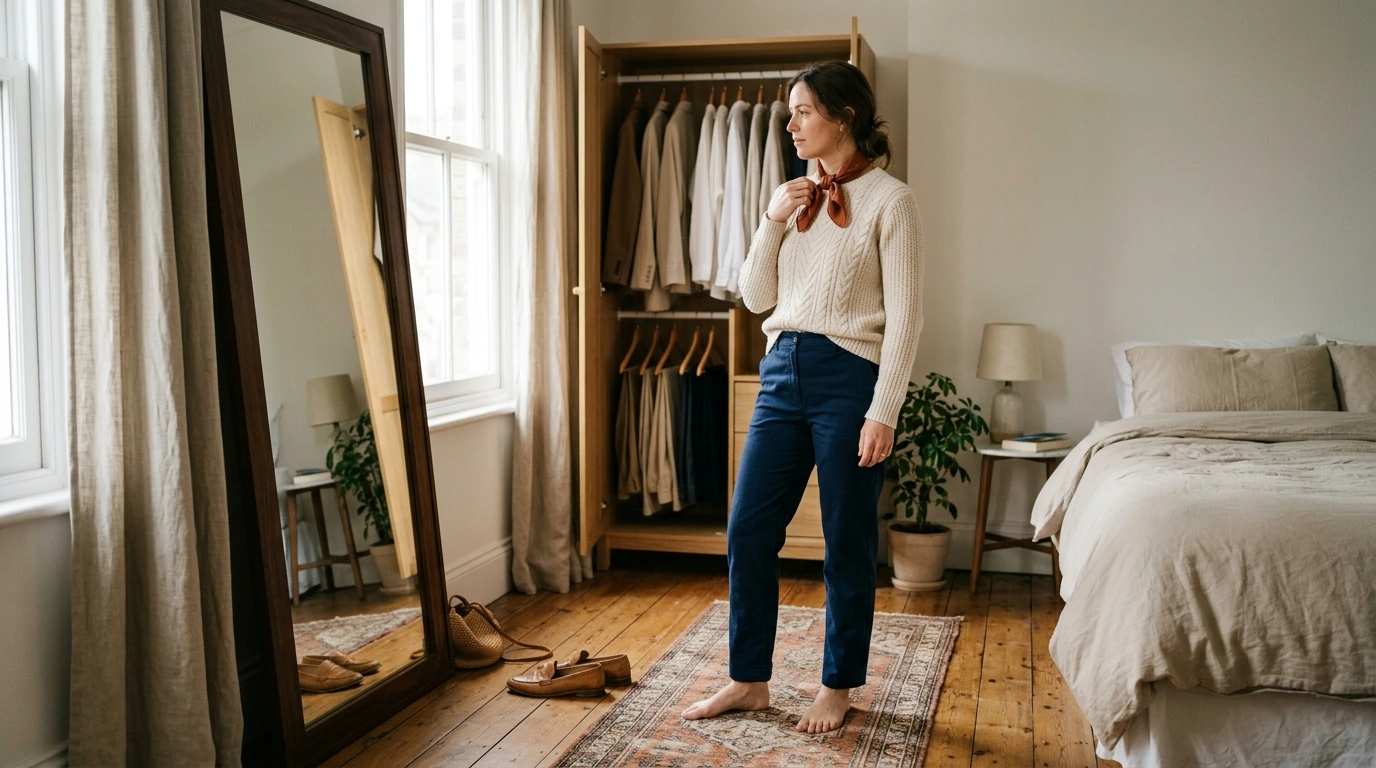
Cohesive outfits aren’t about owning more clothes—they’re about choosing colors that relate to each other in a predictable way. With a few simple harmony rules (plus a handful of reliable color “recipes”), getting dressed becomes faster: pick a base, add one supporting color, then finish with a controlled accent. Below is a practical guide for real-life outfits—including neutrals, denim, prints, and accessories—so your wardrobe mixes and matches with less effort.
When outfits look “off,” it’s usually because every piece is competing for attention. A simple framework keeps things intentional.
Neutrals are the cheat code for outfit harmony because they reduce visual noise while letting one color shine.
If you want quick wins, use one of these simple relationships. (If you’re curious about the basics behind hue/value/intensity, the Getty’s primer on color as an element of art is a helpful reference.)
Think of these as plug-and-play formulas: swap silhouettes while keeping the color relationship the same. If a combo feels “off,” reduce saturation (choose a dustier version) or move the accent to accessories instead of a large garment. For extra cohesion, repeat one color twice (tan belt + tan shoes; burgundy bag + burgundy lip).
| Formula | Works well for | Easy outfit example |
|---|---|---|
| Navy + white + tan | Work, travel, smart casual | Navy trousers, white tee, tan belt/shoes |
| Cream + olive + gold | Relaxed polish, minimal wardrobes | Cream sweater, olive pants, gold hoops |
| Gray + blush + burgundy | Office to dinner, cooler seasons | Gray blazer, blush top, burgundy bag |
| Black + denim + bright accent | Errands, weekend casual | Black top, blue jeans, red sneakers or bag |
| Camel + black + ivory | Classic, elevated basics | Camel coat, black outfit, ivory scarf |
| Chocolate + cream + sky blue | Soft contrast, daytime events | Brown skirt, cream knit, blue flats |
| Forest green + navy + silver | Low-key color, polished casual | Green sweater, navy jeans, silver jewelry |
| Rust + denim + white | Warm, approachable outfits | Rust cardigan, jeans, white tank |
For a faster daily system, a focused reference can help you build cohesive outfits quickly: start from neutrals, choose one harmony method, then add a controlled accent. If you want a ready-to-use guide you can keep on your phone, explore Color Harmony Outfits Made Easy – A Practical Style Guide on Which Colors Make Outfits Look Cohesive for Everyday Dressing.
If you also like practical digital tools for day-to-day planning and routines, these in-stock downloads are available as well: Smart Parenting with AI – Modern Parenting Guide eBook, AI Parenting Toolkit for Toddlers to Teens, Digital Download for Confident Parents and The Kitchen-Table Craft Quest – Printable Checklist for kids creative craft ideas at home | Easy Daily Craft Routine for Kids.
Two to three main colors is the sweet spot, with neutrals acting like “background” that won’t clutter the look. Add one accent in a smaller dose, and repeat a color (like matching shoes and belt) to make the outfit feel intentional.
Start with a neutral base like navy, gray, cream, or denim, then add one color you like and keep the rest simple. Muted tones are the easiest to mix, and reliable pairings include navy/white/tan, cream/olive/gold, and black/denim with one bright accent.
Pull one color from the print and match it to a solid piece, then “frame” the print with neutrals for clarity. Keep the silhouette simple, and echo a print color in accessories (shoes, bag, earrings) to tie everything together.






Leave a comment