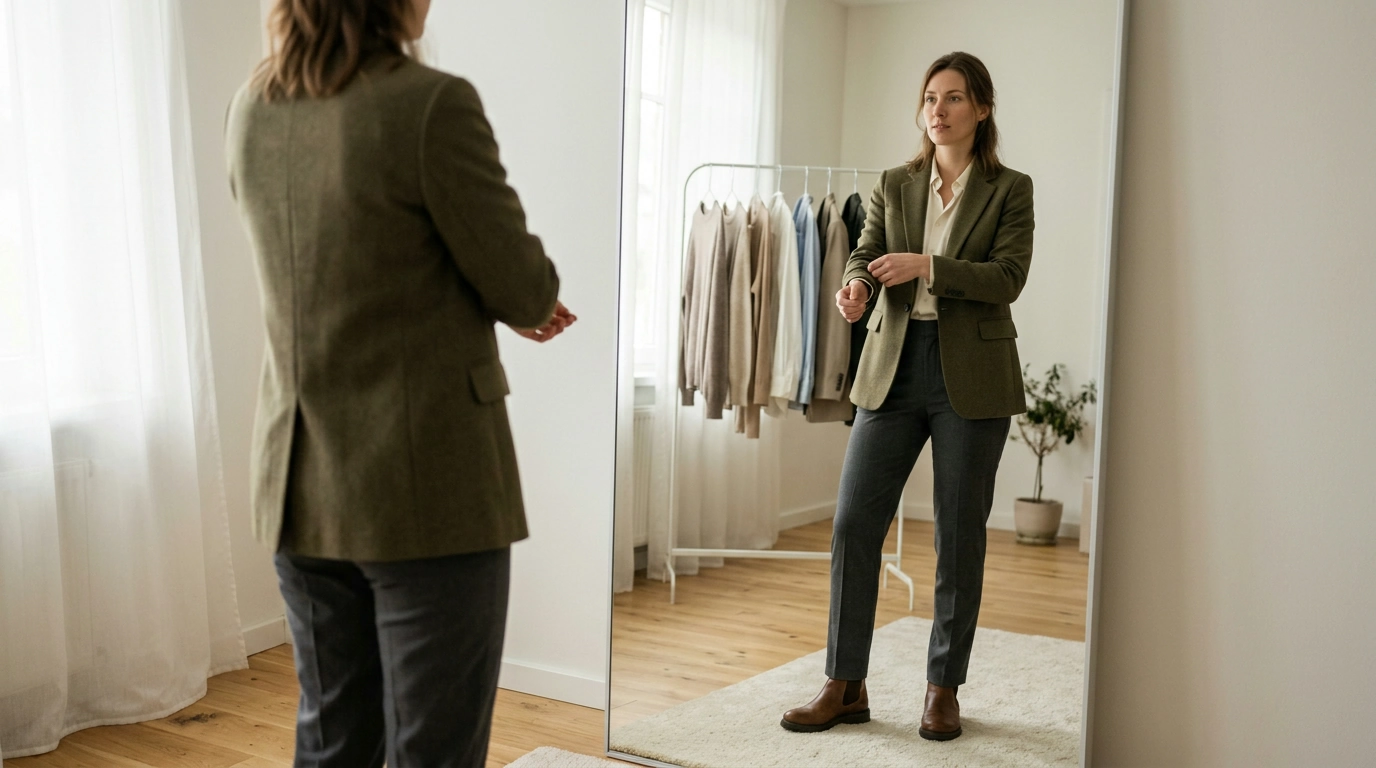
Finding great-fitting clothes as a tall person often comes down to a few repeatable rules: prioritize length where it matters, balance proportions on purpose, and build outfits around consistent silhouettes. This guide breaks down what to look for in everyday pieces, how to style them for confident lines, and how to plan outfits that work across casual, work, and dressy settings.
Tall bodies don’t just need “more fabric”—they need length in the right places. The most common issues show up when a brand grades up width without properly adjusting sleeves, rise, or torso length.
| Item | Best fit checkpoint | Common tall-person miss | Simple fix |
|---|---|---|---|
| Tops (tees, blouses) | Shoulder seam sits at shoulder edge; torso length covers movement | Top lifts when arms raise | Choose tall/longline; size for shoulders and tailor body |
| Sweaters | Sleeve hits at wrist bone; hem covers waistband when standing | Cuffs float above wrist | Look for longer sleeves; opt for raglan if shoulders are broad |
| Jeans | Inseam long enough for full stride; knee area aligns | Knee break too high | Pick longer inseam; try tall-specific fits |
| Trousers | Rise matches waist placement; hem breaks cleanly | Rise too short; “high-water” hem | Select tall rise options; hem to shoe choice |
| Blazers/coats | Sleeves show 0.25–0.5 in shirt cuff; jacket covers seat | Sleeves short; jacket ends high | Prioritize shoulders; tailor sleeves/waist; choose long length |
| Dresses/skirts | Waist seam hits natural waist; length matches intent | Waist seam sits under bust | Choose tall lengths; avoid fixed waist seams if in-between |
Proportion is design, not restriction. The goal is to decide where you want the eye to travel, then support that choice with clean breaks or continuous lines (a classic principle in fashion design and visual proportion; see the overview from Britannica).
One practical tip that saves money: check care labels and wash instructions before committing, since shrinkage hits tall proportions fast. The FTC’s guidance on apparel care labeling is a helpful reference: Textile Care Labels and Guidance.
If you reference creator reviews or paid recommendations while shopping, it’s worth knowing the disclosure rules outlined by the FTC endorsement and testimonial guides.
A useful starting point is 34–36″ inseams for many people around 6’0″–6’3″, and 36–38″ for many people 6’4″+, then adjust based on footwear (boots and heels often need more length than sneakers). Measure a pair you already like from crotch seam to hem, and remember that rise and knee placement matter just as much as inseam for a natural look.
Tall sizes are usually better because they add length in sleeves, torso, and inseam without ballooning the width everywhere else. Sizing up can work for knits or intentionally relaxed fits, but it often creates sloppy shoulders, dropped armholes, and excess fabric in the chest or hips.
Anchor volume with one structured or fitted element (a defined waist, sharp shoulder, or clean shoe) so the outfit still has shape. Keep hem lengths intentional (no “almost cropped” or “almost long”), match scale with medium-to-large patterns, and use footwear that visually balances wider legs or longer tops.





Leave a comment